
How God Speaks Through Music
How God Speaks Through Music
Our chat with music aficionado and writer, Dominique Williams.
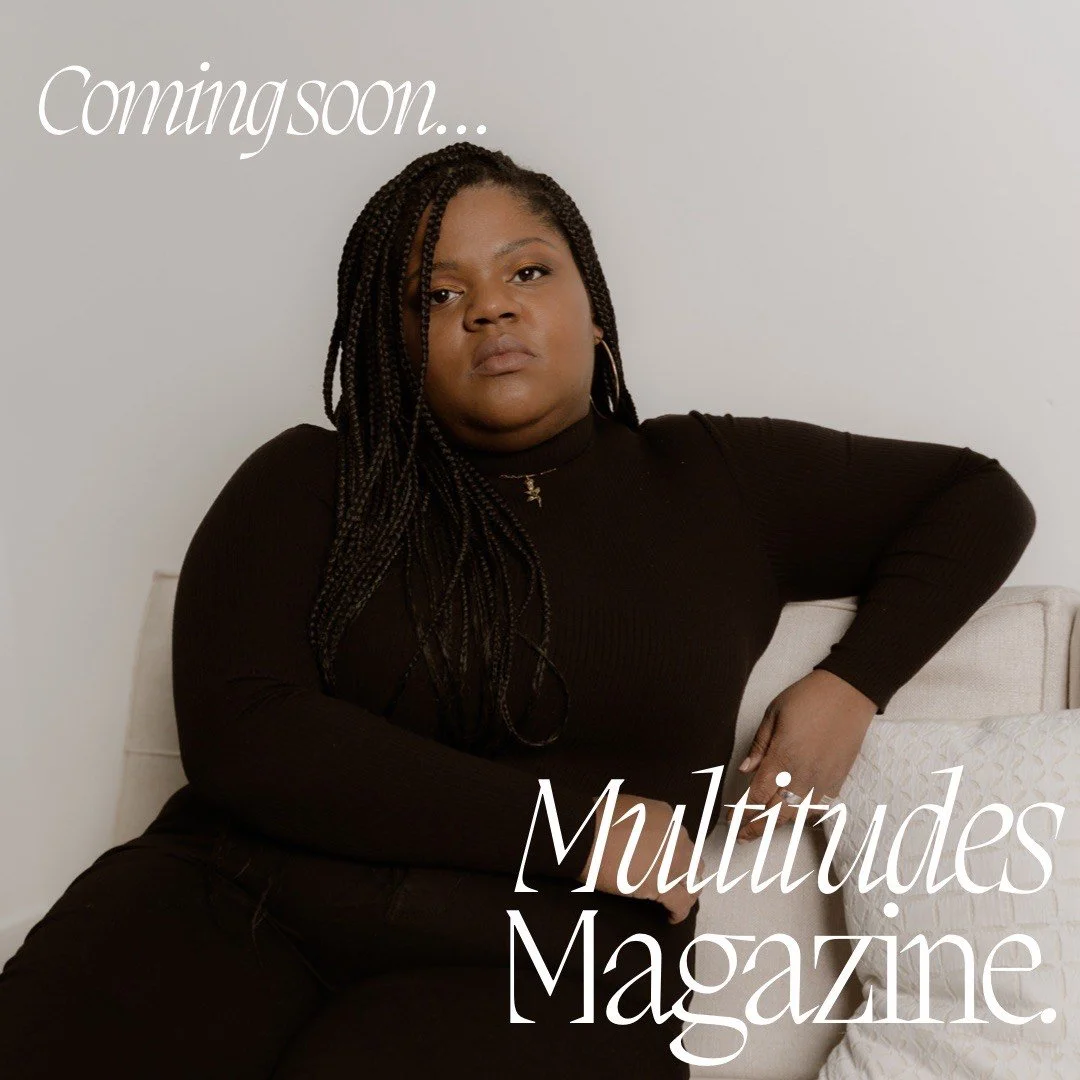
Meet music aficionado and Editor-In-Chief of the forthcoming Multitudes Magazine, Dominique Williams, and learn more about how her relationship with music has influenced her growing years, adult life, and vision.
KW: How does music inspire you? Music is essentially what taught me language, but it’s also taught me how to feel and how to express myself. I think music is such a connector, so in a way it reminds me that someone all the way across the world could hear my favorite song and feel the same way I do about it. They could be going through the same thing as me and in that way, I’m never really alone. In that way, music inspires me to connect as well, but it also helps me tell that story. I always play music when I write. I see full scenes when I hear certain songs, so I definitely need music to help me do the things I love, like write. I need it in my everyday life, too.
KW: Where were you born, and where did you grow up?
DW: I was born in Goldsboro, North Carolina but I moved to Anchorage, Alaska when I was nine months old, so I don't really claim North Carolina because I lived in Alaska for most of my childhood. I’ve also lived in England.
KW: What influenced you to love music as deeply as you do?
DW: When I was younger there was always music playing in my house — jazz, R&B, and gospel, mostly. My dad is a deep audiophile and him and my mom forced me to play piano for almost 13 years (even though I wanted to play the guitar), so those years spent learning the piano taught me discipline. I was also a dancer in school and my mom would haul me around town to dance practice and shows, so I understand music as a language that can be told with your body and how it makes you feel physically. You hear it and you are supposed to move. It is a way to tell stories, and it connects us all. I felt very connected to music from a very young age, so for me music is spiritual.
KW: That’s good.
KW: Who are some of the artists / groups you listened to while growing up?
DW: I was a big R&B kid. It was the neutral point because my parents love jazz and sometimes I would voice my opinion about their music being too slow so R&B was the compromise. Some of my favorite artists to listen to while growing up were Amy Winehouse, Brandy, Tamia, Joe, Brian McKnight, Carl Thomas, Jill Scott, Jojo, Lauryn Hill, Alicia Keys, Usher, TLC, Christina Aguilara, Boyz II Men, Monica, D’Angelo, Angie Stone, Destiny’s Child, Mya and Jazmine Sullivan.
KW: So can you define what it means to be a music curator? Music curation is a fancy term for “pass me the aux and let me play my jams,” ha! There is also a full story of my relationship with a playlist. I love a lot of different types of music, and I was a musician for many of my formative years so understanding how to make an amazing playlist that blends seamlessly is my lane. My love for making playlists has a lot to do with my ear too. I love lyrics that tell a story. I love strong vocals. So I fully "geek” out when I hear a song I love.
KW: What have you worked on as a music curator?
DW: As music curator, I’ve hosted multiple parties, made all the playlists for company benefits and events, and been featured in publications and radio shows for my playlists and music journalism pieces. My podcast, The Intersection, centered around music thoughts and critiques.
KW: Please share your Spotify story about how you ran out of library storage because you hit 10,000 songs. (I always think of this when I still see I have only hit like 4K songs.)
DW: On January 18, 2018, I found out there was a song limit on Spotify. I was actually shocked because I had no idea that was even a thing. But I was trying to add some songs, and I got an error message saying “You’ve reached your limit, you have to delete songs.” I immediately texted my dad, the other music lover in the family, and told him. He responded and was like “What's the limit, 2000?” My response: “10,000,” and he was shocked. So I googled it. I thought there could be absolutely no way that Spotify had a song limit for users’ libraries, but it was true. Until 2020, there was a song limit of 10,000 songs, and only 1% of people ever reached that many songs. That really is the only 1% I want to be a part of.
*Spotify users can add an unlimited amount of songs to their libraries. (Billboard.com)
KW: Dominique, what is an ideal concert experience for you?
DW: At my big age, standing for hours is just not as fun as it once was, but I still do it because I love a small intimate venue where the artist can really connect with the audience in an authentic way.
“God shows His vastness through music. The older I get the bigger God is to me, and the fuller the story becomes.”
KW: In your opinion who puts on the best live shows?
DW: If I love you, I’ll go see you multiple times. So in terms of folks that consistently put on good shows, I would say, Jazmine Sullvian, Kevin Garrett, Jojo, Allen Stone, Syd, and Jacob Banks.
KW: What has been your most favorite concert to date?
DW: Moses Sumney hands down was one of the most amazing concerts I’ve ever been to in my life. I saw him on my golden birthday this year and it was just transcendent. I do not care if you’ve never heard of Moses Sumney, if he’s in your town, GO!
KW: Speaking of concerts, what is your favorite venue / concert space? I think in NYC/BK I’d say Kings Theater. I’ve been to a ton of amazing music venues and there are only a few I genuinely cannot do. To be fair, I have a theory that the crowd and artist make a show what it is just as much as the venue. NYC is a hard crowd to impress so when you have an amazing show you should be proud.
KW: What has been your favorite music festival to attend regularly?
DW: Beale Street Music Festival. I went to college at the University of Memphis, and every summer we would go. I have some great memories there. I don’t do music festivals any more though. My body truly cannot handle it.
KW: I feel the same way. The only festival I make space for is AfroPunk Brooklyn.
KW: Tell us more about how you plan to implement your love of music in your new publication, "Multitudes."
DW: Music will have a significant role in Multitudes Magazine. I love talking with people who love music deeply or are artists and musicians themselves, so many of the magazine’s articles will feature these creatives. No matter who the person is, the stories all discuss how music shaped the person and how it keeps them inspired on their journey. There will be a playlist with each feature, so people can find their new favorites.
KW: Tell me more about this publication. What is the purpose of Multitudes?
DW: Multitudes Magazine is a digital zine space, for the many versions of our humanity and expression of Black, Indigenous, Latine/X, Asian, and Pacific Islander storytellers, curators, and creators. I wanted to create a space where we could just exist and didn't have to be perfect or put together, but could share how we got to where we are. We talk about the real stuff, the vulnerable stuff, and experience all the feelings that come with it and music is the web that holds the stories together.
I am also hoping to have some folks guest feature and share their love and stories about life and music. The site will launch in Spring 2023.
KW: What artist / music creative would you love to have write for Multitudes?
DW: Oh wow, solid question. I actually have a few.
There is a writer named Yoh Phillips and I absolutely love his music journalism and deep dives on albums. He also has a great ear for first-listen reviews.
Hanif Abdurrabqib, a novelist and essayist who writes for everyone on music would also be a dream of mine.
From across the pond, I would love to have Natty Kasambala who is a culture writer and has a focus on music. I love her profiles on artists.
KW: Well I definitely hope each of these people come to write for Multitudes.
KW: One of the things I love about music is the infinite ways songs can sound. I think it paints a picture of or reflects God’s creativity. How do you think God uses music to show His love for us or His creativity?
DW: God shows His vastness through music. The older I get, the bigger God is to me, and the fuller the story becomes. And music has different genres and languages, but they are reflections of people's lives and stories so if you listen truly, you can connect to something bigger than the song. The connection is something that God uses to bring us together in ways we will never know. Music has the ability to make us cry or dance or sing at the top of our lungs. That feeling of being moved to another action is God blessing us to create beyond what is already there.
KW: Can you share a bit on what your faith means to you?
DW: Faith for me is trusting in the unseen and believing God is putting things together for my good. That’s super cliche, but honestly it’s that straight forward. It’s not easy when stuff gets hard and you want to give up or know why, but it’s knowing it’s not over until I’m through it. With faith in God, I know I will make it through.
KW: How does God speak to you through music?
DW: I had some very low seasons at various points in my twenties, even now, and in those times I always seek to listen to something to uplift my spirits. Sometimes though, I just start feeling low and a song will pop in my head, and it will be about what I'm going through. Other times I will be out somewhere and hear something that speaks to my situation. In those random moments, I know that's God. A lot of these songs will get saved to playlists so if something comes up like that again, I just lean back into that playlist. I think God speaks both to comfort me when I'm down but also to give me hope for things to come.
KW: Who is your favorite praise and workshop artist/group? How do their lyrics speak to you?
DW: I grew up on Kierra “Kiki” Sheard, and she has been getting me through since I was a kid. Her voice is just everything. I think I really identify with her as a person in being a bigger girl growing up, and her song “Flaws” and many others have got me through my insecure seasons.
KW: What is your favorite Netflix guilty pleasure?
DW: Goodness do I feel guilty about anything? Not really, but the amount of times I’ve watched both Gilmore Girls and Sweet Magnolias seems a little absurd.
KW: Who are two of your favorite artists currently?
DW: I will always say my all-time favorite artists are Little Simz and Fana Hues. I listen to them the minute I get on a plane.
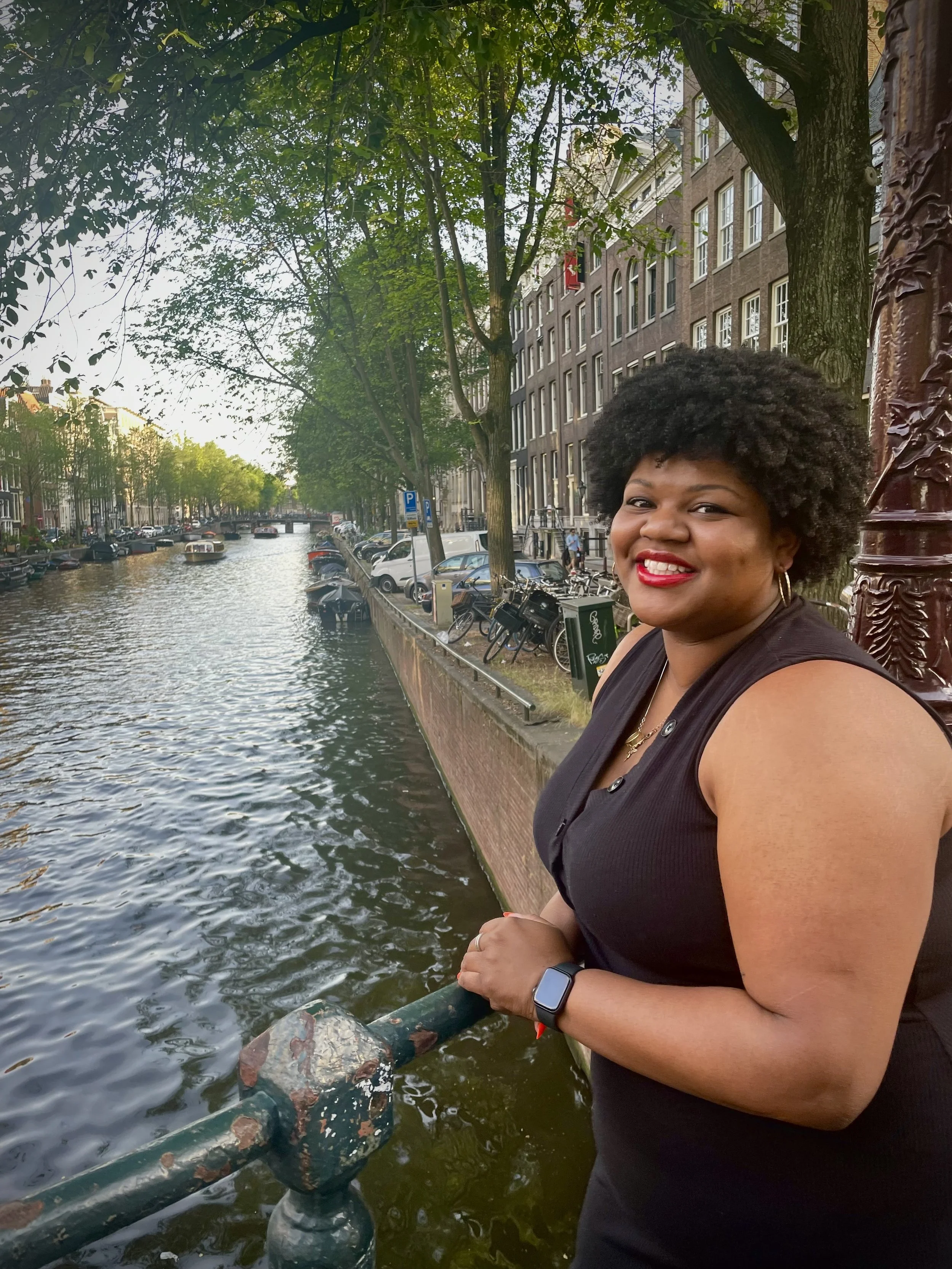
Kendolyn Walker is a creative based in Harlem who serves as producer and founder of The City Love Collective: City Love on the Radio, City Love NYC and the City Love Picnic.
The Power of Lofi Music in Your Daily Routine
All my life, I have enjoyed the words and the beats of songs. The harmony of choruses and the brilliance of metaphors in my favorite tunes. But let me tell you something, as I have gotten older I prefer a good instrumental. Give me a solid track with genius musicians doing their thing. Somehow, in space, I discovered lofi. Instrumental lofi to exact. It has become a portal to effectively zone out and be productive in my work-from-home life. It has made my apartment a place of rest and solitude.
Lofi is a short term for “low fidelity,” and is defined as “a low-quality recording with audible imperfections, such as background noise or performance mistakes, recorded with inexpensive equipment—the opposite of high fidelity or hi-fi production.” I love the imperfections. One of my highlights is hearing birds singing or cups of coffee being poured to introduce the song. The texture of the music in a lofi track reminds me of the sound quality of a cassette tape, so of course, the nostalgia kicks in with each listen. Heck, I still have a WHOLE collection of cassette tapes from my younger years (I was indeed a teen of the 90s). For this reason alone I have come to prefer lofi as one of my consistent, daily soundtracks.
So let’s talk about the health benefits of lofi, because they are an added bonus to the smooth, easy beats. This genre of music “helps the front lobe in our brain to focus – those flaws or low hums can also put the brain in the mindset to focus.” In this article referenced, it makes the point that lofi has been a hit with students for awhile now specifically during studying. The fact that mosts lofi tracks do not have words, means there are no distractions. This makes so much sense to me, as I routinely I am able to focus during my own work time.
“Lo-fi study music also helps increase brain activity, essentially because of the Attention Drainage Effect Theory which affirms that lo-fi sounds drain distractions by allowing the brain to subconsciously and selectively focus on a task while music is playing in the background.” - JapanNamkama.co.uk
Lofi also helps me relax. I immediately feel calmer mentally and physically when I pull out my playlists. The music’s “soft chill beats actually lull your brain to slow down and tune out stress.” (JapanNamkama.co.uk) The orchestrations of sound make my home a happy place. I mean, all music does that, but there is something about that lofi feel when I want music with no distractions.
A couple lofi tracks I really enjoy are “No Good Thing-Instrumental” by Darla Baltazar. She is born and based in the Phillipines and continually adds to her melodic catalogue of tunes. This track was originally done with words, so imagine my joy when I found the instrumental.
Another artist I extremely enjoy is Rottendam native Glimlip. I think I learned of him early on in my lofi journey. Talk about ease, his work finds me where I am. Green Heart is one my favorites.
Sarah, the illstrumentalist’s music has become one of my recent quality findings. Born in Raleigh, NC and now based in Los Angeles, Sarah is a producer and content creator who I was happy to stumble upon in my Spotify searches. Monarch Butterflies has the perfect lofi vibes for with a solid of a two-step beat.
I’ve curated a playlist of lofi music for your enjoyment. You can listen to it here. I hope it adds a bit of joy and calm to your day and helps you to focus. I hope it makes the to-do lists a little sunnier. The benefits of lofi music runs deep, but it’s my hope that you experience it for yourself and add it to your day-to-day routine.
Kendolyn Walker is a creative based in Harlem who serves as producer and founder of The City Love Collective: City Love on the Radio, City Love NYC and the City Love Picnic.
A Cozy Chat with Natalie Forteza
Natalie Forteza and WG Music Editor Kendolyn Walker in conversation.
As Natalie Forteza sat in her Mid-Hudson Valley office and me in my Harlem apartment, we discovered that we share a love for Sadé, Jimmy Fallon, and Ted Lasso. During our Zoom call, we exchanged laughs and her passion for music was evident as she enthusiastically spoke about the writing process, performances, and her journey as an artist.
Natalie’s latest tracks, "What Christmas Should Always Be" and "Who's She" are available on all streaming platforms. I encourage you to take them in, and while you do, continue reading below to learn more about this brilliantly authentic New York-based singer-songwriter.
WG: Tell us more about you and your background - where did you grow up and what were your interests growing up?
Natalie: I’m Texas-born but New York-raised. Around the age of 3 or 4 years old my family—my mom, dad, brother, and I moved to NY from Texas. Up until the age of 12 or 13 we moved every few years. We never lived in NYC, we lived North of the city in different towns of Westchester County, and later we migrated further North to Putnam County. When I got married, my husband & I moved to lower Dutchess County and have remained here for the past 15 years. The Hudson Valley area, and my family upbringing, are the frame in which I’ve grown into the person I am today. It’s always hard to say where I grew up because we moved around a lot the earlier part of my life, and while I have treasured memories in every place we’ve lived, home was always felt wherever my family was.
I was raised by amazing parents. My Mama, Nannette, is Venezuelan-born with some French lineage (and Spanish ancestry somewhere in there too), and my Dad, Antonio, was Puerto Rican with Spanish ancestry [Antonio was my step-dad on paper, but he was always "Dad." He’s the father that raised me to the fullest of its meaning]. My Dad and my Mom gave me my baby sister Adriana. My biological father, Omar, was Colombian, and although I never had the chance the share this world with him, he gave me my brother Anwar, and two sisters Jessika & Alejandra.
Growing up my interests were many, like nature (we often went camping), animals, really anything art! Photography, drawing, painting… I loved it all! I was in my glory when I got new art supplies and even now I still have to exercise restraint in an art supply shop! The pinnacle of my art store visits was when I got a Bob Ross painting set (I never could get those landscapes right though). While I loved it all, i I don’t think I was that great at the visual arts (although I’m thankful my Mom is so sweet to still have some of my watercolors proudly on her wall lol).
“The constant current underneath it all has always been my love for music. I have always been in love with music.”
The constant current underneath it all has always been my love for music. I have always been in love with music. My mother joined the church choir, and she played the Cuatro occasionally at home, but we weren’t necessarily a musical family in the sense that we had musicians in the family, we were just a family that deeply loved music. Music was always on. We listened to a lot of different genres of music: Pop, R&B, Jazz, Opera, Classical, Latin, New Age, and World music. I was fascinated with Opera when I was really little. I’d be held in a trance staring at the TV watching PBS specials, in awe of the spectacular sounds coming out of their mouths! I might be the only kid that wanted to invite other kids over to watch Opera (no surprise that no children came, just Mom). Other than blasting The Police in the car, the music that floods the soundtrack of my childhood the most was Brazilian jazz like that of Joao Gilberto (along with Stan Getz, Astrud Gilberto, and company), along with Venezuelan folk music like that of Serenata Guayanesa. All of these, hold a golden place in my heart.
It's so hard to explain what it does to my soul when I hear this music, it feels like home. When I hear that music, I close my eyes and reminisce on the afternoons we spent in the yard, swinging in the hammocks, playing with my little sister in the sandbox, Mama’s pitcher of iced tea, being in the kitchen while she cooked, setting the table for company, the many walks we did around the neighborhood and the smell of campfires. Like they say, music transports.
WG: Tell us more about what you do and how you empower the community of women around you.
Natalie: I'm a singer and songwriter. While I look forward to the day that writing, recording, and touring (and being on Jimmy Fallon) become my full-time vocation, I also have the honor of working part-time for a woman-owned and operated health + beauty brand, Cold Spring Apothecary.
It’s hard for me to say how I might empower the community of women around me, as they would know more than I. I’d like to think that I offer them the kind of space to be themselves, to be heard and listened to and to be seen without judgment; how I would want to be empowered and supported. We can be awfully hard on ourselves, so I do feel that it’s important we surround ourselves with people we admire, who we can be honest with, who can see who we are and who we can be even through our shortcomings, and can intervene or come to our defense when we’re not kind or true to ourselves.
WG: When did you start writing and singing?
Natalie: I always sang, I sang in the car wherever we went, I sang in the shower (for the acoustics of course), but it was always timidly in the comfort of my nuclear family. It wasn't until my mid-teens that I worked up the nerve to put myself in front of people, starting at church, then Chorus and concert productions in high school. Even though I had vivid dreams of being a singer, an artist, it felt like a faraway dream and an unlikely reality.
I chickened out auditioning for a music school, so I studied Communications in college, got a job, and tried to ignore those vivid dreams to be “more realistic.”
Before I got the chance to reconsider, in 2001 my Dad, Antonio, passed tragically in the American Airlines flight 587 crash. Needless to say, the only thing I could focus on then was my family.
I ran into a high school classmate years later, and he was surprised I hadn’t “ended up in music,” because he remembered me singing, and loving music so much in school. What he said stayed with me, and with my Dad’s passing, it was a reminder of how life can change so suddenly, so I thought I should do something about it.
I started to look for opportunities to perform, I joined a local jazz group for a short while before I felt I needed to start my own thing. There’s a long list of people I’m grateful for that led me to that decision, and that ultimately led me to who I am today. Some I had short conversations with, and others I have known for years. Having collected words of support, kindness, and encouragement from various sources led me to believe that if I was going to pave my own way, I had to find my own voice, and learn to write my own songs. I NEVER thought I’d be a songwriter. I didn’t have the chops, I didn’t come from a family of musicians, I didn’t go to school for music, I didn’t play an instrument. All these reasons were stacked up in my head. However, through the beautiful degrees of separation that is the music community, I found my musical “hermanos,” my friends and bandmates. I’ve had a blast performing and writing with my writing cohorts: Akie Bermiss (keys) and Anthony Candullo (bass) for the past 10 years.
WG: Who inspires you and why?
Natalie: Oof. I could write endless paragraphs to answer this question. I’ll try to be as concise as possible [cracks knuckles]. Musically, there are quite a few I could mention.
My foremost and steadfast muse has been and will forever be, Sade. I still pray for the day that I might have the chance to meet her and the band. Every artist/musician has a moment when they say, “That’s it! That’s what I want!” Sade (she herself, as well as the band) did it for me. Sade created a space for me. Sade helped me to find my voice. Sade broke molds. While their music had a signature sound, it blurred genre lines (in a time when hard labels were king). Their music felt organic, not trend-driven, and as a vocalist, she delivered velvety melodies without the acrobatics, and the vibe?! C’mon! She’s the Queen. Watching her was like seeing manifestations of my own dreams—the visuals, the drama, the simplicity, the depth, the stage production, the lighting, the fabric, the instrumentation, the recording production, and on and on. In a time, when labels notoriously dictated what, when and how, she seemed to defy that and live her art on her terms, and sell out huge shows. What I can say is for the young, timid, alto singer I was at the time, who didn't have the mega voice of the chart- topping legends of the time, she released me, she gave me permission to be myself, to find my own voice, and OWN it. I never wanted to emulate her, no one can, but she was living proof of the things I had only dreamed of in my head, and proof that you could be true to yourself and your craft AND still be successful.
I’m always gaining new inspiration from artists I discover, but a couple that have been with me for some time would also be Sting—a songwriter who, in my opinion, can look at a stone and write an amazing song about it! Emily King, a native New Yorker, has also carved out a space for herself and her art. Her authenticity feels so organic it seems like you could call her up to meet for coffee. She has the sweetest voice, and just writes superb, superb songs.
“My mom has had tremendous triumphs and devastating trials throughout her life and has met them both with humility, grace, humanity, authenticity, hope, perseverance, and sacrifice.”
In life, there are also many people who inspire me, but this person is the “Sade” of my personal life. My Mama. My mom has had tremendous triumphs and devastating trials throughout her life and has met them both with humility, grace, humanity, authenticity, hope, perseverance, and sacrifice. She’d never say she “lost” anything, she’ll only tell you what she gained. She truly “sees” people, her compassion is boundless, even if she disagrees with you or you’ve crossed her, she’ll tell you like it is, in her sassy-Latina-like way, but also in the nicest way. We have had some dark times, and even in the middle of it, we could find a way to laugh—like stomach-cramps-level laughing, just extraordinary. She pushes us to be our best, and always accepts us as we are. My mother has loved us at our best and at our worst. She gave us our sense of home and our sense of adventure. She’s both couture and good-ol'-classic-jeans. She’s champagne and beer. She’s whimsical and worldly, and through all of it always solidly on the ground.
WG: What are you most proud of in the work that you do?
Natalie: I keep trying and I keep learning. While I can be pretty hard on myself, I can say that I'm not afraid to work, to keep learning, to keep getting better in as much as I can. Whether it's vocal growth, performance, songwriting, time management, social media, production, or playing an instrument.
WG: What has been your biggest struggle as an artist/ creative?
Natalie: I was just about to list a few things right off the bat I struggle with, but after taking a second to think about it, it all comes down to one thing really--staying out of my own way, and more importantly, staying out of God's way is the hardest struggle. It rears its head the most often in two areas:
1. Vulnerability - mostly when it comes to live performances. I put a lot of pressure on myself, and I get in my own way to take risks, to make mistakes—I know it’s how you grow—but letting go is hard to do, and often the what I need to pray about before performing.
2. Letting go of the pressure of always being “on.” There's a lot of problem-solving involved in trying to achieve big dreams; financial constrictions, limited contacts, not having enough time, not having enough help, not having enough exposure. "how do I get to this point?” There's a lot of pressure to constantly be “on," doing something all the time to solve or work through these challenges. I believe in being a good custodian to the gifts & passions I've been given, by growing, being disciplined, and being driven. If I'm not mindful, I'll get in my own way and in God's way, stealing peace and rest from myself, keeping myself from just living life! In doing so I get in the way of relying on Him. So I need to do a better job of inviting Him, including Him in the process, in the challenges, in the failures, and in the victories. Way easier said than done of course, but it's something I'm trying to be more heedful of.
“If I'm not mindful, I'll get in my own way and in God's way, stealing peace and rest from myself, keeping myself from just living life!”
WG: Is there a verse, quote, or life mantra that you live by? If so, what is it?
Natalie: I've had some wonderful, life-changing vocal coaches, one of which was Sharon Bryant. During our sessions, she'd give me an exercise and she'd see me thinking and calculating before anything would come out of my mouth, so she'd put her hands on my shoulders, look me in the eye and say to me, "Natalie, just sing!" Those words help me to get out of my head. Creators often strive for perfection, but it really gets in the way of just doing whatever it is we need to do, including the need to make mistakes. Something I really don't like! I know it's a necessary part of the process, so I have to tell myself, "don't think, just sing." This translates into other areas too. Her words have turned into somewhat of a Nike-like slogan for other things, "don't think, just write," "just trust," "just rest." I've started to write "Just Sing" on my setlists to give myself permission to let go, and give myself over to whatever comes. Thank you for this Sharon.
WG: What does faith mean to you? How do you live it out practically? Natalie: A question that's hard to answer in just a few words. A basic definition of faith is, "a belief and trust in and loyalty to God." But it's more than that, isn’t it? To me, it's a trust-fall into God's hands. It's believing before I can see versus seeing and then believing. It's trusting God's promises. It’s an invitation, a relationship with God, through Christ.
I live it out practically knowing that I'm not perfect, my faith isn't perfect, but He is. I miss having a dad, and it helps me to understand faith, by seeing Him as a parent, my heavenly Father; He wants to provide. He wants to be invited into my life, and He wants me to trust Him even if I don't understand. And when I fall, He's there, every time. There's no question my mother loves her children; she loves all of who we are, the good and the ugly. So if I can believe that, then how much more does God love us?
WG: What has God shown you as you continue to grow in your craft/career?
Natalie: He constantly surprises me. I've thought of or prayed for something, and ever so gently or suddenly He answers it. He's given me strength-physical and mental-when I've asked for it. He's given me creative clarity and inspiration when I've asked for it. Having spent so much time by myself the last couple of years during the pandemic, when I had been so accustomed to working with others, I had to ask for His help to give me the ability, the mental bandwidth, and patience, and He answered all of it overabundantly.
Ephesians 3:20, "Now all glory to God, who is able, through his mighty power at work within us, to accomplish infinitely more than we might ask or think."
He's also showed me to trust the "no's." Another area I struggle with, but so important to be cognizant of. Abner Ramirez and Amanda Sudano, known as the duo, Johnnyswim, said it best in their book Home Sweet Road, "...When God closes the door sometimes, walk away from the damn door. [Abner] You're at the wrong door [Amanda]...You're at the wrong house. On the wrong block. You know what I mean?! Keep walking, keep moving [Abner]."
WG: What has brought your happiness while dealing with the pandemic (since March 2020)?
Natalie: So much. At the height of the pandemic when we couldn't really go anywhere, picnics on a blanket in the yard made us feel like we were away, we created little seating nooks in our house, so when we made cortados and cappuccinos it made us feel like we were in a cafe somewhere. The first food we got to-go was a bacon-egg-and-cheese from a local spot in Beacon, NY [Beacon Daily]. We would drive an hour just to get out of the house to our favorite town of Hudson to buy coffee and croissants to-go from one of our favorite spots [Le Perche]. Sitting on the front stoop, watching live stream concerts over several weeks of one of our favorite artists, Amos Lee.
One of my absolute favorite things was (and still is) reading my Ian Fleming, James Bond books! They offered blissful escapism and inspired me so much that I wrote my own "Bond song," called "Love is a Gun." The thrill writing it made me so happy you would've thought Barbara Broccoli had asked me to write it for the last Bond film. We made cocktails to celebrate the song's premiere (aka uploading it to SoundCloud lol) at our favorite lounge (aka, our living room). Above all else, what not only kept us afloat through it all but helped us to find happiness amongst the chaos was, gratefulness. Grateful to be healthy, grateful to have everything we needed; work, food, a home, a peaceful home, and each other, having a partner, the best companion, my hubby by my side through it all was everything.
WG: What are you listening to right now? Who's on your music playlist?
Natalie: Ooooh ok, here goes! RY X has been on repeat for close to 2 years now! His album "Live from the Royal Albert Hall" and various classical music playlists were what got me through some of the toughest parts of the pandemic. Amos Lee is always on heavy rotation. Emily King has a permanent address in my playlists, and artists like Lianne La Havas, London Grammar, Yola, Lauren Daigle, Johnnyswim, Max Richter live in the playlist neighborhood too. Can we talk about Adele's new album, 30?! I couldn't be more thrilled for her. Most recently, I listened to Yebba's "Live at Electric Lady." wow. It's been a while since I've wanted to get lost in headphones listening to a record. She's incredible, I find myself hanging on every note that comes out of her, and what I would've given to be a fly on the wall for that session.
WG: What has been your favorite venue to perform in at this point and why?
Natalie: I have a couple of favorite venues like Daryl's House, owned by Daryl Hall, for its first-class hospitality and tremendous sound design--Pete Moshay is the best. The Falcon, also for its heartwarming hospitality, and community is its heartbeat. Tony Falco, a legend and its founder, was a champion of artists and musicians local and worldwide, and while he's no longer with us, his spirit has stayed with us all. But one of the most recent venues I had the honor of playing was the historic Tarrytown Music Hall in Tarrytown, NY, the sound was crystalline and getting the chance to play a historic stage like that in my backyard per se, left me pretty inspired.
WG: What do you do to rest and pour into yourself?
Natalie: Movies. Books. Croissants. And coffee. I love me some movies and a bag of Bjorn Qorn popcorn (I'm terrible at sharing popcorn though). I loved books all my life, but I feel like, for a long time, I couldn't finish them, or I didn't make enough space for them. But over the past few years, I've been able to renew my book love, and really enjoy diving into a book, so much so that I try to carve out 30 minutes at least three times a week to read. Especially if it's a Bond book, James Bond, 007. If I didn’t emphasize this point before, I am a Bond fanatic! My hubby gave me the first book of the series a few years ago, and since then I've been gobbling up the subsequent books, just loving the escapism in them. But the best is when the hubby & I can find a new or favorite spot to grab a coffee and a croissant, those moments are precious and really renew me.
WG: What was your most recent TV show binge? Why did you like it, or why didn't you like it?
Natalie: Ted Lasso! oh, man. Easily one of the best, and favorite shows ever. It was unexpected, I fell so fast in love with his character, rooting for him, and ended up rooting for so many more characters as the episodes unfolded. The character arcs were brilliantly written and executed. I belly laughed, and full-on cried. Touching on so many relatable subjects it was easy to latch onto the emotions (here comes the deep stuff). Honestly, I kinda feel like Ted sometimes, like I'm the new kid trying to convince people why I'm here. I'm often the obnoxious optimist trying to be the hypeman for myself and others (if I could walk around with a "Believe" sign I would), and I think people assume that because I'm an optimist or positive I must not have any trauma or grievances of my own. But like we learn in Ted Lasso, don't judge a book by its cover. Ted Lasso did a great job of punching through expectations and assumptions, with a full range of emotions and did it in a way that when you finished an episode you couldn't resist a smile on your face.
WG: Which of your songs is your favorite to perform?
Natalie: As of late, "Love is a Gun (a tribute to James Bond, 007)”
WG: Tell me about the top 3 people in your life who cheer the loudest for you.
Natalie: Yikes. This feels like the Hunger Games trying to narrow it down to 3 spots: #1. My husband, Saverio. That's easy. Spots #2 and #3 I'm gonna have to give to my whole family (to avoid a chancleta (a flip flop in Spanish) getting thrown at me. My mother, my siblings, my Abuela (my grandmother), and the whole family tree is shaking, cheering for me, I can feel it.
WG: Lastly, where can people find you or your work?
Natalie: www.NATALIEFORTEZA.com. My music is available on all major platforms and social media via Instagram: @natalie_forteza and Facebook: @nataliefortezamusic.
WG: Anything else that you want to share about your passions or that you want our readers to know about you?
Natalie: Random trivia? Hmm... I have a serious popcorn problem, I loooooove Popcorn. I LOVE shoes. I'm not an excessive person, but I can never have too many shoes. Maybe it's a hidden talent, maybe not, I don't know, but I have this thing, a game really, "Who's voice is that?" When watching commercials, I can usually figure out who the celebrity is in the voiceover—it’s not a superpower I know, but could be a fun talent for a skit on Jimmy Fallon one day.
Kendolyn Walker is a creative based in Harlem who serves as producer and founder of The City Love Collective: City Love on the Radio, City Love NYC and the City Love Picnic.
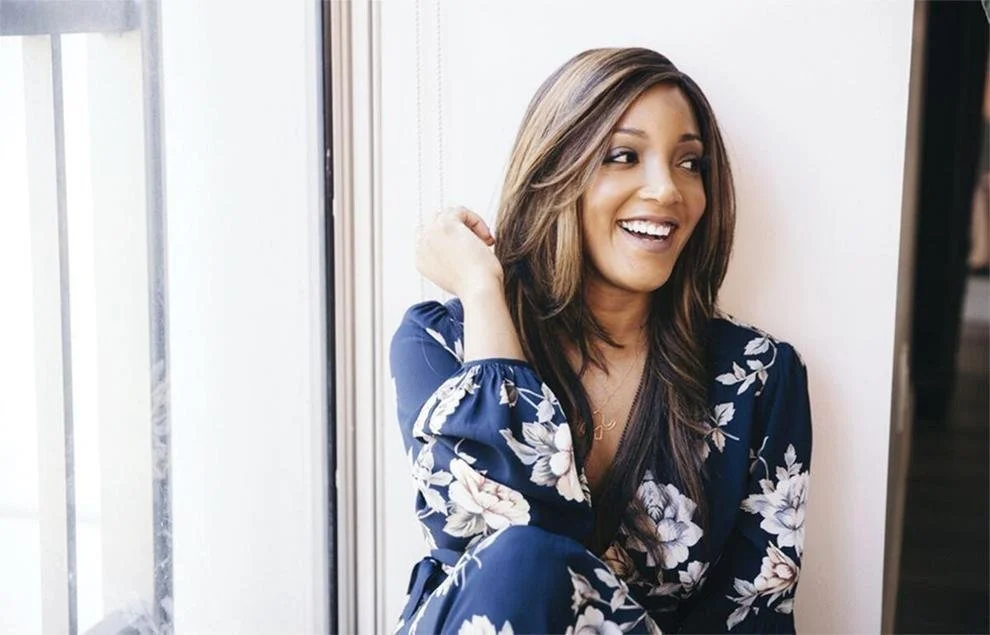
Why Mickey Guyton Is Necessary
“Sitting at home and watching the world burn down around me during this pandemic led me to write ‘Heaven Down Here’,” Mickey Guyton said in a statement. “It is a song asking God to spare a little love for this world in need. This song came from the very depths of my heart and has given me a renewed sense of self. It has real raw emotion and was written with a therapeutic intent of healing my heart. I hope that everyone can hear that intent and receive the same healing.” (cmt.com)
“Heaven Down Here” is a song that many of us can deeply relate to, as it expresses emotions and frustrations that arise when things are happening unexpectedly and outside of our control. Guyton wrote this authentic piece to describe her own personal reckoning but in doing so, she gave an empathetic voice to us all.
Guyton became the first Black female solo artist to earn a GRAMMY nomination for Best Country Solo Performance (2021) for the powerful tune, “Black Like Me.” This track emphatically speaks to the hardships of racism in this country and deserved many more awards quite frankly.
My younger brother introduced me to Mickey Guyton’s music during Black History Month last year as I was searching for tunes to add to our Wit + Grace Music Monday playlist. So, I was ecstatic to learn that she was selected to sing The National Anthem at this year’s Superbowl game. As I listened to her library, the honest, yet humble tone of “Heaven Down Here” immediately resonated with me.
As I listened to this song, my own moments of questioning God came to mind as I sought peace in the midst of my own personal storms. I was reminded of the desperate times I have reached out to God for answers. In recently losing my father, and dealing with other hardships, I understand the emotions in trying to make sense of catastrophic chaos.
“Hey God, it’s me
I hate to be a bother
But I could use a minute or two
Yeah, I’m just so
Heartbroken, disappointed
In the way this world is coming unglued
And I can’t help but wonder are you”
“Black Like Me” is a song that speaks to a truth Guyton has had to constantly fight against. Even recently, she shared a post someone wrote that claimed she was being used as a token in the country music community. This is why Mickey Guyton is necessary. Her music speaks to injustices wherever they take place. She uses her words to break down the sinful barriers racism creates. She is okay with getting into the “good trouble” that Rep. John Lewis talked about and encouraged, combating the oppression systemic racism has maintained on all fronts.
If you think we live in the land of the free, you should try to be Black me… Just to live that good life, mm, It shouldn't be twice as hard.
Black artists are not new to country music. Linda Martell, Rissi Palmer, Rhiannon Giddens, and Sunny War are just a few of many Black country singers that have had longstanding careers in this genre. Palmer paved the way for Guyton at Capital Records even, as she discussed here. The significant problem is the artists in the Black community are not usually recognized by mainstream country music platforms. In the PBS series, “Black Artists Helped Build Country Music—And Then It Left Them Behind” by Ken Burns, Burns speaks to this important, often left out, historical fact. (Time.com)
“... one of the series’ central tenets is that country music has always been home to African-American artists.”
Sadly, much of Guyton’s criticism and hateful correspondence has come from White Christians. In early 2021, Guyton received a slew of hate mail after calling out the industry‘s racism and sexism. As a Christian, she was deeply disappointed in receiving such harsh words from members of her own faith community. All of these challenges seem to only propel Guyton’s mission and calling forward. Representation of the Black community is in the heart of everything she accomplishes. I believe Mickey Guyton will continue to use her platform to amplify Black voices in the country music genre, and beyond.
Learn more about Mickey Guyton here.
Kendolyn Walker is a creative based in Harlem who serves as producer and founder of The City Love Collective: City Love on the Radio, City Love NYC and the City Love Picnic.